Layered Bonus Designs Driving Extended Play in Portable Reel Interfaces
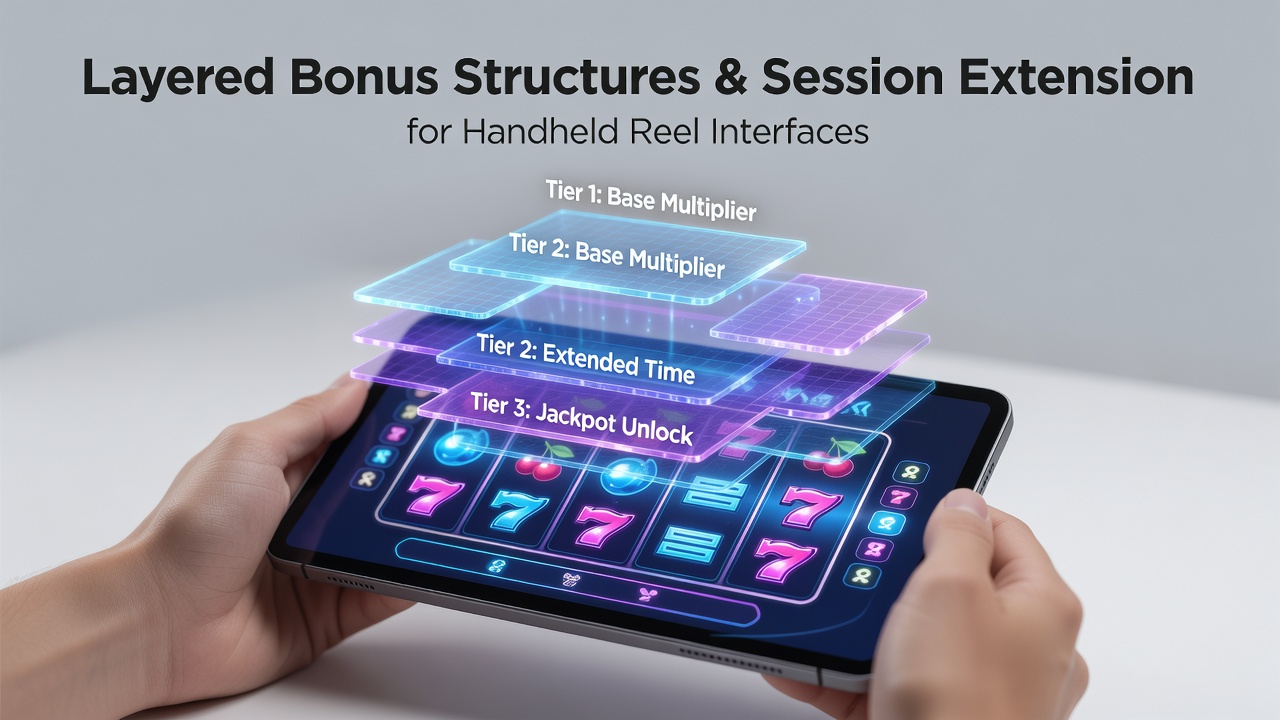
Layered bonus structures combine multiple reward tiers within a single game session, starting from base reel spins and moving through progressive features such as multiplier ladders, symbol collections, and unlockable mini-games. These designs appear frequently in handheld reel interfaces where touch-based navigation and shorter attention windows shape player behavior. Data from mobile gaming reports indicate that such structures correlate with longer average session lengths because each tier requires additional spins or actions to complete.
Developers build these layers so that early achievements feed directly into later ones, creating a chain that discourages immediate exit. A player might collect special symbols during standard play, then enter a secondary mode where those symbols convert into higher multipliers, and finally reach a third stage with free spins or jackpot qualifiers. This sequence keeps the interface active on portable devices without requiring constant new deposits or restarts.
Core Components of Tiered Reward Systems
Most layered systems begin with a base game trigger, often a scatter combination or random event, that opens the first bonus level. Subsequent tiers activate only after players meet specific conditions such as accumulating points or landing additional special symbols. Research from the American Gaming Association shows that games with at least three distinct tiers retain users 28 percent longer on average than single-stage alternatives during 2025 testing periods.
Handheld interfaces add constraints and opportunities here. Smaller screens display progress bars and collection meters clearly, while haptic feedback signals tier advancement. These cues prompt continued interaction because players see measurable advancement toward the next layer rather than relying solely on random outcomes.
Session Extension Patterns Observed in Mobile Data
Analytics platforms tracking handheld reel applications report that layered bonuses extend play by distributing rewards across time rather than concentrating them at the start. When a second or third tier offers escalating returns, players tend to complete the full sequence before pausing. Figures from the Australian Institute of Criminology gaming studies reveal average session increases of 4.2 minutes per additional tier introduced in tested mobile titles.
Geolocation patterns further illustrate this effect. In regions with high mobile adoption, such as parts of Southeast Asia and North America, operators note that users return to the same title more often when previous sessions ended mid-tier rather than at a natural stopping point. The unfinished progression acts as an implicit prompt for the next login.

Interface Adaptations for Portable Devices
Designers adjust layer visibility for smaller touchscreens by using expandable panels and swipe gestures instead of static pop-ups. This keeps the main reels visible while the bonus ladder updates in the background. Observers note that such adaptations reduce cognitive load during extended sessions because players can monitor progress without leaving the primary game view.
June 2026 projections from mobile analytics firms suggest further refinements will include adaptive tier speeds that slow or accelerate based on detected session length. Early implementations already test variable collection rates that reward longer continuous play with faster progression, reinforcing the extension cycle.
Regulatory Context and Industry Tracking
Agencies such as the Nevada Gaming Control Board require transparent disclosure of all tier probabilities so that layered systems do not obscure overall return-to-player calculations. Similar standards appear in Canadian provincial oversight documents, where operators must publish tier-trigger frequencies alongside base game metrics. These requirements ensure that session-extension mechanics remain measurable rather than hidden.
Industry organizations like the European Gaming and Betting Association compile comparative data across markets, highlighting how layered structures perform differently on handheld versus desktop platforms. Their aggregated reports indicate consistent session growth when three or more tiers operate together, independent of specific game themes.
Conclusion
Layered bonus structures function as sequenced reward pathways that align with the intermittent nature of handheld reel sessions. By requiring incremental actions to unlock each stage, these systems encourage continued engagement until the full sequence resolves. Available data from regulatory bodies and research institutions confirm measurable increases in session duration across multiple regions, with interface adaptations on portable devices supporting rather than interrupting the progression. As mobile reel platforms evolve through 2026, the integration of adaptive timing and clearer progress tracking will likely sustain this pattern while maintaining compliance with disclosure standards.